Independent assurance that your controls actually work — the way enterprise customers expect to see it
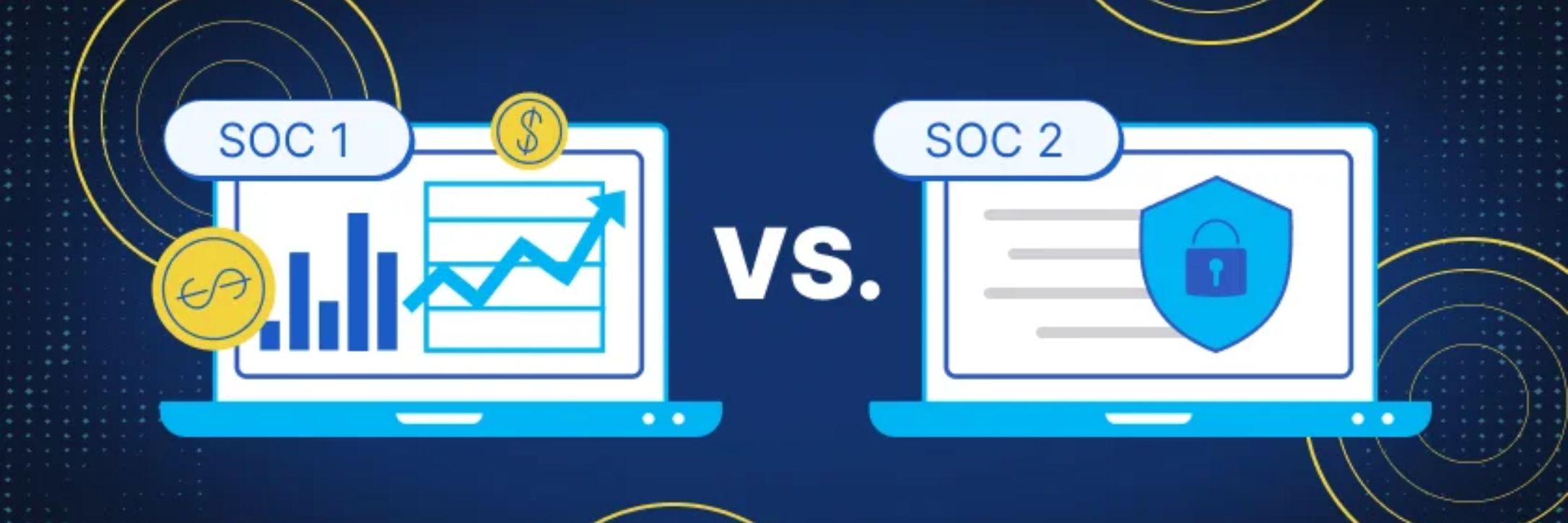
SOC (System and Organization Controls) reports are independent audit reports, issued under standards set by the American Institute of CPAs (AICPA), that evaluate a service organization’s internal controls. SOC 1 focuses on controls relevant to a client’s financial reporting; SOC 2 focuses on controls relevant to security, availability, processing integrity, confidentiality, and privacy — the Trust Services Criteria. For most SaaS, cloud, and technology vendors, SOC 2 is the one enterprise customers and procurement teams ask for by name.
We help you scope the right report, close control gaps, and manage the audit process with a licensed CPA firm through to report issuance.
Which report do you need?
| SOC 1 | SOC 2 | |
|---|---|---|
| Focus | Controls affecting a client’s financial statements | Controls over security, availability, processing integrity, confidentiality, privacy |
| Typical users | Payroll processors, fund administrators, billing/finance platforms | SaaS, cloud, and IT service providers generally |
| Who asks for it | Client’s external financial auditors | Enterprise customers, security/procurement teams |
| Framework | AICPA SSAE 18 | AICPA Trust Services Criteria |
Type I vs. Type II
| Type I | Type II | |
|---|---|---|
| Assesses | Design of controls at a single point in time | Design AND operating effectiveness over a period |
| Typical period covered | N/A (point-in-time) | 3, 6, or 12 months (12 is the most commonly requested) |
| Market perception | Useful as a first step or for time-sensitive deals | The standard enterprise buyers actually rely on |
Who needs this: B2B SaaS companies, cloud infrastructure providers, data processors, and any vendor handling customer data where enterprise buyers require independent assurance as part of vendor risk assessment — increasingly a deal-blocking requirement in enterprise sales cycles.
Typical timeline: Readiness and gap remediation — 6–10 weeks. Type I audit — can follow shortly after readiness. Type II audit — requires the full observation period (commonly 3–6 months for a first report) before the audit itself can be conducted, plus 4–6 weeks for fieldwork and reporting.
Step 1 — Scoping and report type selection
We determine whether SOC 1 or SOC 2 fits your business, which Trust Services Criteria to include (Security is mandatory; Availability, Confidentiality, Processing Integrity, and Privacy are added based on customer needs), and whether to pursue Type I or Type II.
Step 2 — Readiness assessment
A gap analysis compares your current policies, technical controls, and evidence-generation processes against the applicable criteria, identifying what’s missing before a formal audit begins.
Step 3 — Control design and remediation
Missing or weak controls are built out — access management, change management, incident response, vendor risk management, encryption practices, logging and monitoring — along with the policies documenting them.
Step 4 — Evidence collection process
Since Type II specifically tests operating effectiveness, we help set up repeatable evidence collection (access reviews, change logs, onboarding/offboarding records) so evidence accumulates naturally rather than being reconstructed at audit time.
Step 5 — Observation period (Type II only)
Controls operate under normal business conditions for the selected period (typically 3–12 months), during which evidence of consistent operation is collected — this period cannot be shortened or retroactively fabricated.
Step 6 — Audit fieldwork
An independent, licensed CPA firm conducts the audit — reviewing documentation, testing control operation, sampling evidence, and interviewing relevant personnel across the review period.
Step 7 — Report issuance
The CPA firm issues the SOC report, including the auditor’s opinion, system description, and (for Type II) detailed test results for each control — this is the document shared with customers under NDA.
Step 8 — Continuous compliance
Since reports typically need annual renewal to stay current for procurement purposes, we help maintain the control environment and evidence trail year-round rather than treating it as a once-a-year scramble.
About the organization
Policies and procedures
Technical evidence
About your infrastructure
Notes
Removes a common enterprise sales blocker
Many enterprise buyers now require a SOC 2 report — often Type II — before signing, as part of vendor security review. Having one ready shortens sales cycles that would otherwise stall in security questionnaires.
Independent, credible assurance
Because the report is issued by a licensed CPA firm rather than self-attested, it carries weight that internal security documentation or questionnaire responses alone don’t.
Reduces repetitive security questionnaires
A current SOC 2 report answers the majority of standard vendor security questionnaire questions in one document, reducing the back-and-forth typically required per deal.
Strengthens actual security posture
The control-building and evidence-collection discipline required for SOC 2 — access reviews, change management, incident response — improves real operational security, not just the appearance of it for auditors.
Builds trust with customers and partners
Being able to share a SOC 2 report under NDA signals operational maturity, particularly valuable for companies handling sensitive customer or financial data.
Foundation for other certifications
Much of the control environment built for SOC 2 overlaps significantly with ISO 27001 and other security frameworks — pursuing those later becomes considerably faster once SOC 2 evidence and policies exist.
Competitive differentiation
In markets where SOC 2 isn’t yet universally expected, holding a current report differentiates a vendor from competitors who can only offer self-attestations.